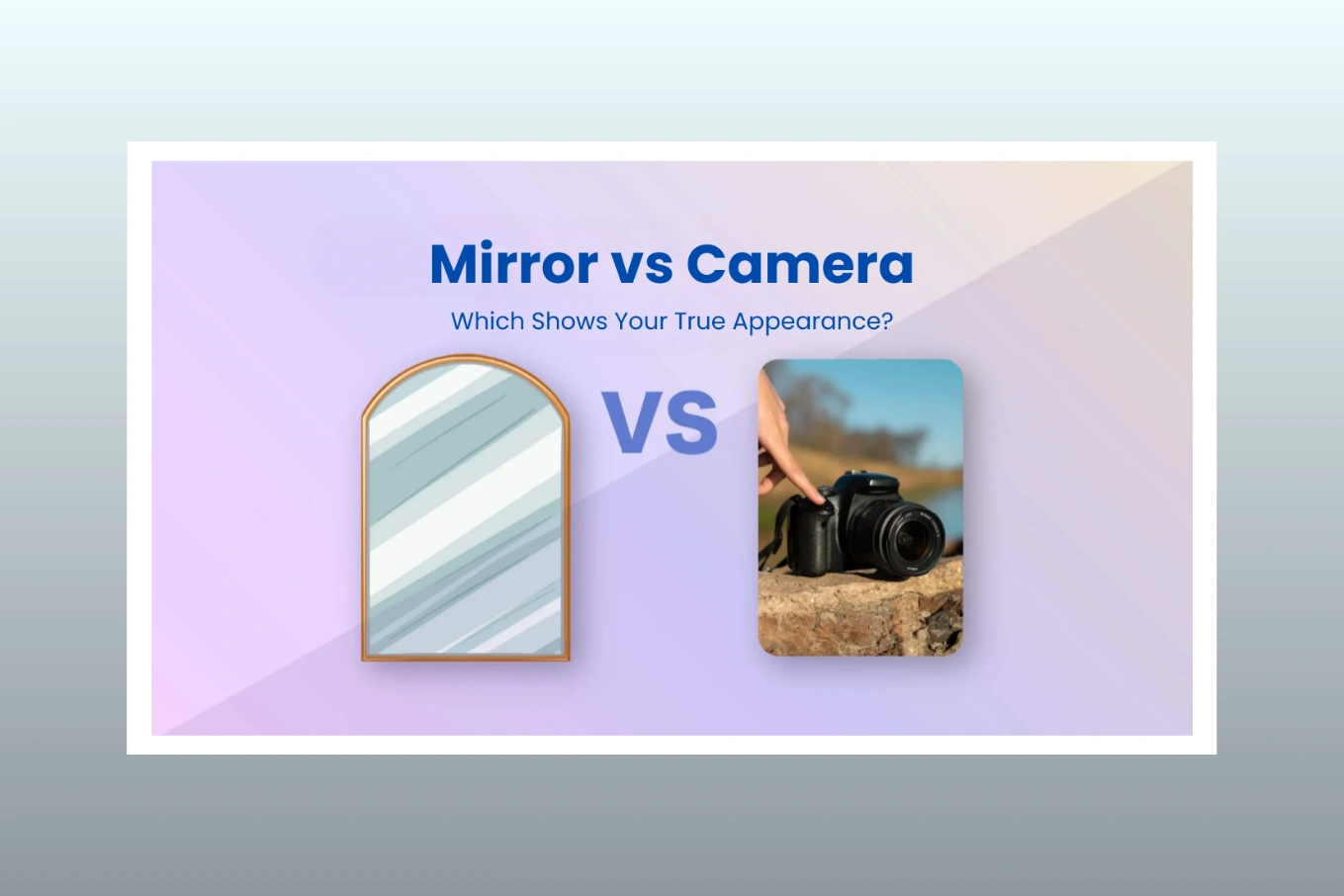
Mirror vs Camera: Which Shows Your True Appearance?
Cutout Partner
January 6, 2026
0 views
Understanding how we really look has become more important than ever in a digital world dominated by selfies, video calls, social media profiles, and professional branding. Many people feel confident when looking at themselves in the mirror but become confused or disappointed when they see their appearance in photos or videos taken by a camera. This contrast often leads to a common and emotionally charged question: does the mirror show how we truly look, or does the camera capture our real appearance more accurately? To answer this question properly, it is essential to explore the science of reflection, camera technology, human psychology, lighting, angles, and image processing. Only by understanding how each medium works can we determine which one offers a closer representation of reality and why the difference feels so dramatic.

Almost everyone has experienced this moment at least once in life when they look into the mirror and feel confident about how they look, but when they see a photo taken by a camera, they suddenly feel surprised, confused, or even disappointed. This experience makes many people ask the same question again and again, which is whether the mirror shows the real face or the camera shows the real face. This question is very common because mirrors and cameras show us in different ways, and our brain also plays a role in how we understand what we see. Understanding the difference between mirror images and camera images can help people feel more confident and less worried about their appearance.
This topic is important for everyone, including children, teenagers, adults, and even photographers professionals who work with photos every day, such as photographers, designers, and photo retouching companies like Cutout Partner, which is known as a premium photo retouching company helping people look their best in images. When we clearly understand how mirrors and cameras work, we can stop blaming ourselves for looking different in photos and start appreciating how technology and human vision work together.
In this article, we will explain everything in very simple language that even a six to seven year old child can understand, but with enough depth and detail so adults can also learn something valuable. We will talk about how mirrors work, how cameras work, why faces look flipped, why lighting changes everything, how distance affects the face, how lenses can change shape, and why our brain prefers mirror images. By the end of this article, you will clearly know which one is closer to your real appearance and why both are correct in their own ways.
How a Mirror Shows Your Face
A mirror is something most people see every day. When you stand in front of a mirror, light comes from your body and hits the mirror surface, and then the mirror sends that light back to your eyes. This is why you can see yourself clearly. However, the mirror does something very special that many people do not think about, which is flipping your image from left to right. This means your right side looks like it is on the left, and your left side looks like it is on the right.
This flipping happens because mirrors reflect light straight back, and your brain understands this reflection as your image. You have been seeing this flipped version of yourself since childhood, which means your brain feels very comfortable with it. Because of this comfort, when you see yourself in the mirror, your face looks normal, balanced, and familiar. Even small details like a smile, eyebrow shape, or nose angle look correct because this is the version of your face your brain knows best.
Mirrors also show your face in real time, which means there is no delay and no freezing of a moment. You can move, smile, talk, and change expressions naturally. This makes your face look more alive and more attractive because movement helps hide small imperfections. The mirror also shows your face at a close distance, which makes it feel personal and gentle, and this closeness helps you feel connected to your reflection.
Another important thing about mirrors is that they usually show your face under lighting you control, such as bathroom lights or bedroom lights. You can move closer or farther, tilt your head, and choose the angle you like best. Because of all these reasons, the mirror often feels kind and friendly, which is why many people think the mirror shows their true appearance.
How a Camera Shows Your Face
A camera works very differently from a mirror, even though both use light to show images. A camera captures light through a lens and saves that light as a photo or video. When a camera takes a picture, it freezes one small moment in time, and that moment may not be the best one. You might blink, move slightly, or make a strange expression without noticing. This frozen moment can make your face look very different from how you usually see it in the mirror.
Cameras also do not flip images the same way mirrors do, unless the image is edited later. This means when you see a photo taken by someone else, you are seeing your face the way other people see it, not the flipped version you are used to. Because your brain is not familiar with this version, it may feel strange or wrong, even though it is completely normal.
The camera lens also plays a very big role in changing how your face looks. Some lenses make faces look wider, while others make them look longer or flatter. If the camera is very close to your face, your nose might look bigger and your ears might look smaller. If the camera is far away, your face may look flatter. These changes are not about your real face but about how lenses work.
Lighting also affects camera images much more than mirror images. A small shadow or bright light can change how your face looks in a photo. Harsh light can show every line and texture, while soft light can make skin look smooth and gentle. Professional photographers and premium photo retouching companies like Cutout Partner understand this very well and use lighting, angles, and editing to create images that feel natural and balanced.
Why Mirror Images Feel More Beautiful
One big reason people prefer their mirror image is because of familiarity. Your brain likes things it sees often. Since you see your mirror image every day, your brain believes that this version is the correct one. When you see a photo that is not flipped, your brain notices small differences and thinks something is wrong, even though nothing actually is.
Another reason mirror images feel more beautiful is because you can control them. You can smile slowly, choose your angle, and adjust your posture. In photos, you usually do not have this control, especially when someone else takes the picture. The mirror also shows movement, and movement makes faces look more friendly and alive.
Mirrors also do not usually show tiny details as sharply as cameras do. Cameras can zoom in and capture very small details, such as skin texture or uneven features. While these details are completely normal, seeing them clearly can make people feel uncomfortable. Mirrors soften these details naturally, which makes the face look smoother and more balanced.
This does not mean the mirror is lying. It simply means the mirror is showing a version of you that feels more familiar and comfortable, while the camera is showing a version that feels new and sometimes surprising.
Why Camera Photos Can Look Unflattering
Camera photos can sometimes look unflattering because they capture a single moment without context. Your face is not meant to be frozen in time. It is meant to move, change, and express emotions. When a camera freezes your face, it may catch an awkward moment that does not represent how you usually look.
The lens of the camera can also change shapes. Wide-angle lenses are common in phones, and they can make the center of the face look bigger and the sides look smaller. This can make noses look larger or faces look wider. This is not your real face, but just a result of how lenses work.
Lighting in photos can also be very harsh. A strong light from above can create shadows under the eyes, while light from below can make the face look strange. Professional photographers spend a lot of time learning how to use light correctly, and professional editing services like Cutout Partner help fix lighting problems in photos to make them look natural and realistic.
Another reason photos can feel strange is because you see them out of context. When you see yourself in real life, you see movement, personality, voice, and emotion. A photo only shows one small piece of you, and that can never fully represent who you are.
Which One Shows Your True Appearance?
The truth is that both the mirror and the camera show real versions of you, but in different ways. The mirror shows how you see yourself, while the camera shows how others may see you. Neither one is wrong, and neither one is perfect.
Your real appearance is not just a single image. It is how you look when you move, smile, talk, and interact with the world. It is a combination of many moments, angles, and expressions. A mirror shows one part of this, and a camera shows another part.
When people look at you in real life, they do not see you as a frozen photo or a flipped mirror image. They see you in motion, with expressions and personality. This is why people often look better in real life than in photos, and why worrying too much about photos can be harmful to confidence.
Understanding this helps people feel more comfortable with themselves and less critical of their appearance. It also helps explain why professional photo retouching exists, not to change who you are, but to make photos feel closer to how you look in real life.
The Role of Photo Retouching in Showing Reality

Photo retouching is often misunderstood. Many people think it means changing a face completely, but professional photo retouching is actually about correcting technical problems such as lighting, color balance, shadows, and lens distortion. A premium photo retouching company like Cutout Partner focuses on making photos look natural, clean, and realistic, rather than fake or exaggerated.
Retouching helps photos match what people see in real life. It removes harsh shadows, fixes uneven lighting, and balances colors so skin looks natural. It can also correct lens distortion that makes faces look wider or longer than they really are. This helps photos feel more honest and closer to reality.
For businesses, especially in eCommerce, photography, and personal branding, good retouching is very important. It helps build trust, confidence, and professionalism. When photos look natural and balanced, people feel more comfortable and connected.
Helping Children Understand Their Appearance with Photographers
For children, understanding mirrors and cameras is very important for building healthy self-esteem. Children may feel confused or sad when they look different in photos compared to mirrors. Explaining that cameras and mirrors work differently can help them feel better and more confident.
Parents and teachers can explain that a photo is just one moment and not a full picture of who they are. Children should be encouraged to focus on how they feel, how they act, and how they treat others, rather than worrying about how they look in a picture.
Using simple examples, such as showing how shadows change with light or how funny faces look when frozen, can help children understand that photos are not perfect representations of real life.
So, Which One Shows Your True Appearance?

The honest answer is that neither mirrors nor cameras show your complete true appearance on their own. Mirrors show a reversed but familiar and dynamic version of you that your brain prefers, while cameras show a non-reversed but often distorted and static version that lacks depth and movement.
In real life, people see a three-dimensional, moving, expressive version of you under constantly changing lighting and perspectives. This real-life perception is closer to how a high-quality photo or video taken from a natural distance with proper lighting would appear, rather than a quick selfie or a harshly lit snapshot.
Understanding this can be freeing. It means that an unflattering photo does not define how you look, just as a flattering mirror moment is not an illusion. Both are partial representations influenced by technology, physics, and psychology.
Explore More Relevant Resources
- How to Choose the Best Camera for Photography
- When Were Cameras Invented? A Complete Timeline
- Best 3 Point Slinger For Camera On Professionals
Final Thoughts: Learning to Love Both Versions of You
In the end, the mirror and the camera are both tools that show different sides of you. The mirror shows a familiar and comforting version that helps you feel confident, while the camera shows a technical version that helps capture memories and moments. Neither one defines your worth or beauty.
Understanding how they work helps you feel more relaxed and confident. It helps you stop worrying about small differences and start appreciating yourself as a whole person. With the help of good lighting, proper angles, and professional editing from trusted companies like Cutout Partner, photos can become more natural and closer to how you look in real life.
Your true appearance is not just what you see in a mirror or a photo. It is how you smile, how you move, how you speak, and how you make others feel. When you understand this, both mirrors and cameras become friendly tools instead of sources of worry.
Frequently Asked Questions (FAQ) On Mirror vs Camera
1. Why do I look good in the mirror but strange in photos?
You look good in the mirror because you are used to seeing that version of yourself every day. The mirror flips your face from left to right, and your brain has learned to accept this flipped image as normal and familiar. When you see a photo, especially one taken by another person, your face is not flipped, so it looks different from what your brain expects. This difference feels strange, even though your face is still the same. Photos also freeze one small moment, and that moment may not show your best expression, which can make you feel uncomfortable.
2. Does the mirror lie or does the camera lie?
Neither the mirror nor the camera is lying. They simply show your face in different ways. The mirror shows a flipped version of your face that you are very familiar with, while the camera shows an unflipped version that other people usually see. Both images are real, but they are created in different ways. Your true appearance is not only one image, but a combination of how you look when you move, talk, smile, and express feelings.
3. Which one shows how other people see me, the mirror or the camera?
The camera usually shows how other people see you more closely than the mirror does. This is because other people do not see your face flipped like you see it in the mirror. However, people do not see you as a frozen photo. They see you moving, smiling, and changing expressions, which means real life looks better than most photos.
4. Why does my face look uneven or different in photos?
Most human faces are naturally a little uneven, and this is completely normal. When you look in the mirror, your face is flipped, so the uneven parts look familiar. In photos, the face is not flipped, so small differences feel more noticeable. Cameras also capture tiny details very clearly, which can make normal features stand out more than they do in real life.
5. Do phone cameras make faces look worse?
Phone cameras do not make faces worse, but they can change how faces look. Many phone cameras use wide-angle lenses, which can make the nose look bigger and the face look wider if the camera is too close. This is a technical effect of the lens and not a reflection of how you actually look in real life.
6. Why does lighting change how I look so much in photos?
Lighting changes how shadows fall on your face. Strong or harsh light can create dark shadows and make skin texture more visible, while soft light can make skin look smooth and gentle. In real life and mirrors, lighting usually changes as you move, but in photos, the light is frozen in one position, which can make features look stronger or different.
7. Why do I look better in videos than in photos?
Videos show movement, and movement makes faces look more natural and attractive. When you talk, smile, and move, your expressions change smoothly, and this hides small imperfections. Photos freeze one moment, which may not show your face in the best way, while videos show many moments together.
8. Is my real face the one I see in the mirror?
The face you see in the mirror is real, but it is a flipped version. It is the version you know best because you see it every day. It feels comfortable and correct to you, but it is not exactly the same way others see you. Still, it is a real and honest reflection of you.
9. Why do professional photos look better than normal photos?
Professional photos look better because photographers understand lighting, angles, camera distance, and lenses. They know how to capture faces in a natural and balanced way. Professional photo retouching, like the services provided by premium companies such as Cutout Partner, also helps fix lighting problems and lens distortion so photos look closer to how people appear in real life.
10. Does photo editing change how I really look?
Good photo editing does not change who you are. It corrects technical issues like bad lighting, shadows, color problems, and camera distortion. Professional retouching helps photos match how you look in real life rather than creating an unrealistic image.
11. Why do selfies look different from photos taken by others?
Selfies are often flipped by phone cameras, so they look more like mirror images. Photos taken by others are usually not flipped, so they look unfamiliar to you. This difference is why many people prefer selfies over regular photos.
12. Can mirrors and cameras affect confidence?
Yes, mirrors and cameras can affect confidence, especially if people do not understand how they work. Knowing that both show different versions of the same face helps people feel better and more confident. Your worth is not decided by one photo or one reflection.
13. Do people notice my flaws as much as I do in photos?
Most people do not notice small flaws the way you do. You look at your own photos very closely, while others see your whole face, your smile, and your personality. Small details that bother you are usually invisible to others.
14. Is it normal to dislike photos of myself?
Yes, it is very normal. Many people feel this way because photos show an unfamiliar version of their face. This does not mean you look bad. It only means your brain is not used to that image yet.
15. How can I look more natural in photos?
You can look more natural by using soft lighting, keeping the camera a little farther away, relaxing your face, and thinking happy thoughts. Working with professional photographers or professional retouching services can also help photos look more natural and realistic.

Share this post

Ready to transform your images?
Elevate your brand with stunning, high-impact visuals. We’ll refine your photos to leave a lasting impression!
Get Started Now!